
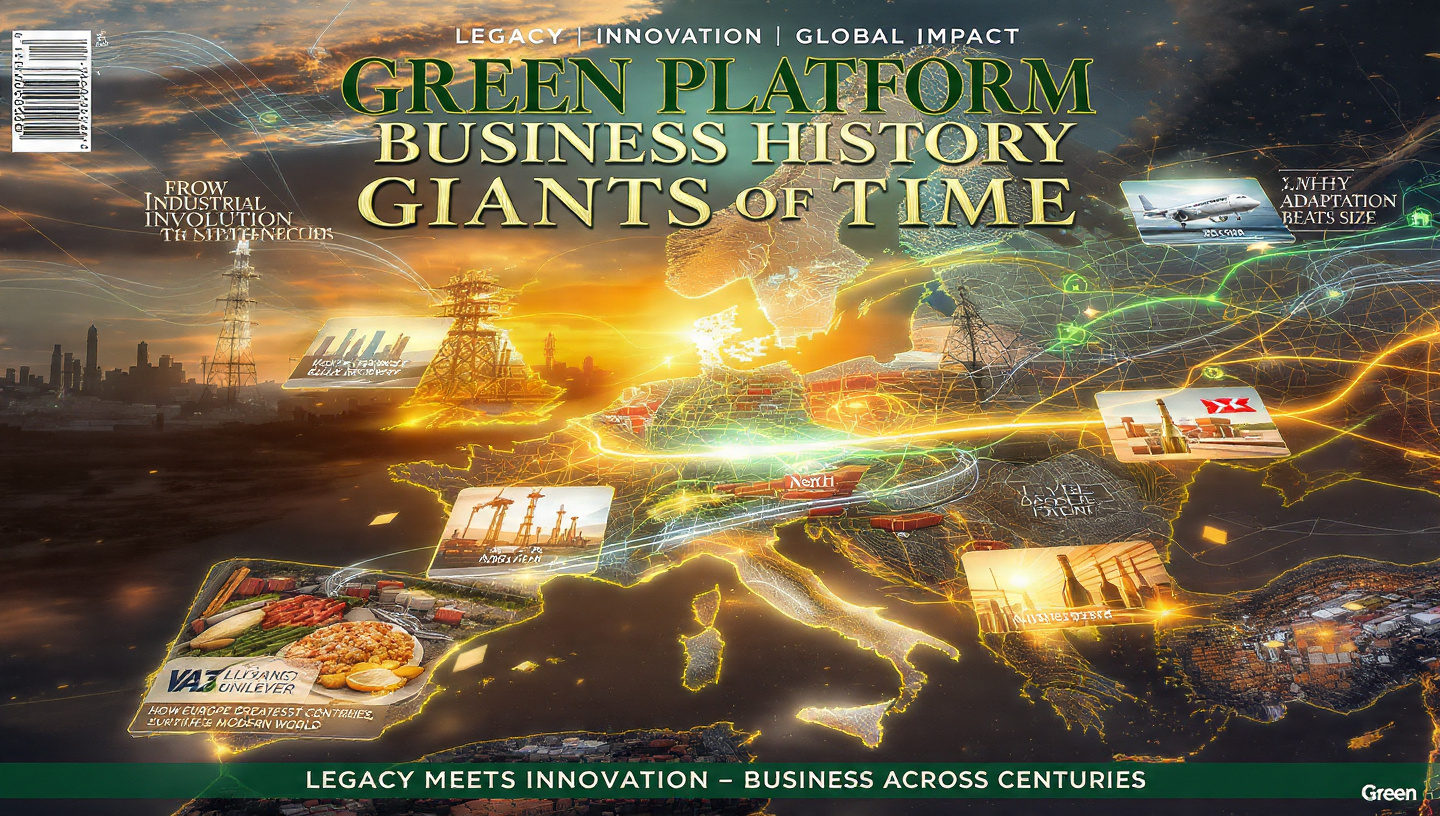
How Europe’s Greatest Companies Survived Centuries and Shaped the Modern World
History is not written by moments alone — it is written by institutions that endure.
Across Europe, a handful of companies have not only survived wars, revolutions, and technological upheaval — they have helped define the modern global economy. From industrial engines in Germany to consumer brands born in Switzerland and the United Kingdom, these enterprises adapted across centuries, influencing how people live, work, travel, and connect across America, Asia, Africa, and beyond.
This is the story of ten European companies whose legacy continues to shape the world we see today.
🏭 Siemens — Engineering the Industrial Age
Founded in 1847, Siemens emerged during Europe’s industrial transformation. Beginning with telegraph systems, Siemens expanded into electrification, railways, medical technology, and automation.
Its infrastructure projects powered factories, hospitals, and transportation networks across continents — helping modernize cities from Europe to Asia and North America. Today, Siemens remains central to smart manufacturing and digital industry, proving that engineering foresight can outlive generations.
🥛 Nestlé — Feeding a Growing Planet
Born in Switzerland in 1866, Nestlé began with infant nutrition during a time of high child mortality. Over time, it evolved into one of the world’s largest food and beverage companies.
Nestlé’s global supply chains transformed agriculture, retail, and nutrition standards worldwide — influencing diets across Europe, the Americas, Africa, and Asia. Its story reflects how consumer goods became global lifelines in the modern age.
🛢️ Shell — Fueling Global Mobility
Formed in the early 20th century through the merger of British and Dutch interests, Shell helped power the age of automobiles, aviation, and industrial expansion.
Shell’s energy networks supported globalization itself — enabling trade routes, logistics, and manufacturing to operate at scale across continents. From post-war reconstruction in Europe to rapid development in Asia, Shell’s reach mirrored the world’s growing dependence on energy.
🧼 Unilever — Everyday Products, Worldwide Impact
Established in 1929, Unilever combined British and Dutch enterprises to deliver household essentials globally.
From soap and food to personal care products, Unilever’s brands entered billions of homes. Its influence helped standardize consumer markets and distribution models, particularly in emerging economies throughout Africa and Asia.
🚗 Volkswagen — Mobility for the Masses
Founded in Germany in 1937, Volkswagen rose from post-war recovery to become one of the world’s largest automakers.
Volkswagen’s vehicles reshaped transportation culture in Europe and America, while its manufacturing methods influenced automotive production worldwide. Its evolution reflects how industrial rebuilding turned into global leadership.
🚘 BMW — Precision Meets Performance
Tracing its roots to aircraft engines in 1916, BMW transitioned into luxury automobiles and motorcycles.
BMW became synonymous with engineering excellence, exporting German precision across continents and helping define premium mobility in Europe, the U.S., and Asia.
💻 SAP — Powering the Digital Enterprise
Founded in 1972 by former IBM engineers, SAP helped usher Europe into the digital age.
SAP’s enterprise software now runs supply chains, payrolls, and logistics for organizations worldwide — forming invisible digital infrastructure behind governments, corporations, and manufacturers on nearly every continent.
💎 LVMH — Crafting Global Luxury
Created in 1987, LVMH unified heritage European craftsmanship with modern branding.
From fashion to fine wines, LVMH exported European luxury culture globally, reshaping consumer aspirations in Asia and America while preserving centuries-old artisanal traditions.
🏦 HSBC — Banking Across Empires
Founded in 1865 in Hong Kong and Shanghai, HSBC was born from global trade between Europe and Asia.
HSBC became a bridge between East and West, financing commerce across continents and helping establish modern international banking systems.
⚡ BP — Energy and Economic Transformation
Originally founded in 1909, BP played a major role in supplying fuel during world wars and post-war rebuilding.
BP’s operations supported industrial growth and urbanization worldwide, underscoring how energy shaped geopolitical and economic development.
🧠 Conclusion: Europe’s Corporate Legacy in a Globalized World
These companies did more than survive time — they adapted to it.
They endured wars, embraced technology, expanded across borders, and evolved with shifting markets. Together, they helped build:
- Global supply chains
- Modern transportation
- Digital enterprise systems
- Consumer economies
- Energy infrastructure
- Financial connectivity
Their influence stretches from European factories to American cities, Asian megacities, African markets, and emerging economies worldwide.
History reminds us that longevity comes not from size alone — but from reinvention.
And as platforms like Green Platform reflect in today’s digital era, visibility, adaptability, and connection remain the timeless pillars of business survival. Just as Europe’s giants once navigated industrial revolutions, modern enterprises now navigate digital transformation — proving that while tools change, the foundations of success remain remarkably constant.
In the end, history does not belong to those who resist change — it belongs to those who evolve with it