
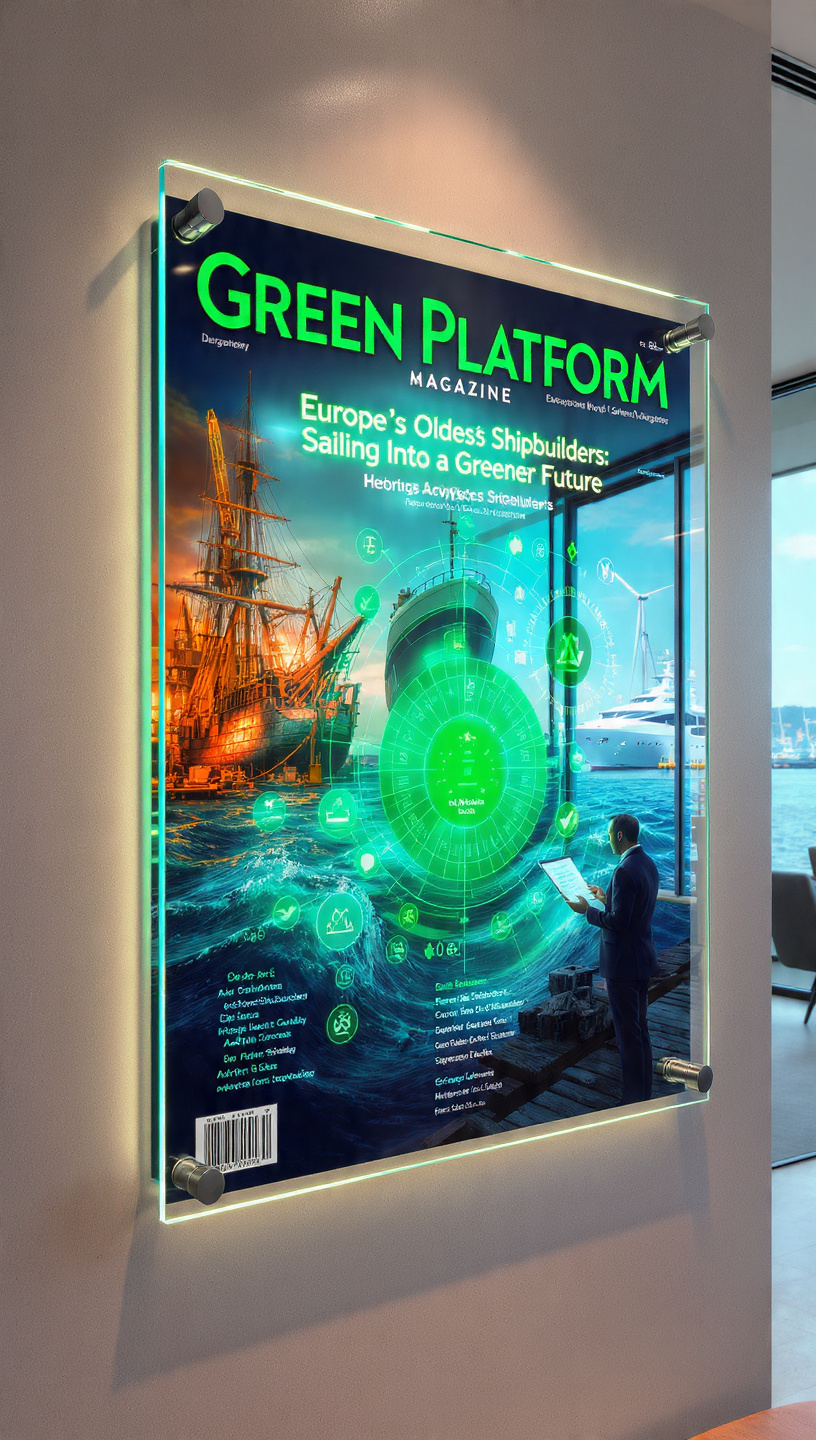
A survival story of timber, steel, saltwater, and serious maritime grit.
Before container ships crossed global trade routes…
before cruise liners became floating cities…
before naval engineering reached digital precision…
Europe was already building ships.
From wooden sailing vessels to modern hybrid propulsion yachts, a small group of shipbuilders have survived centuries of war, industrial revolutions, economic crises, and technological upheaval.
They didn’t just build boats.
They built empires, trade routes, and global influence.
And they’re still operating in 2026 — fair dinkum resilience.
🌍 Europe’s Maritime Backbone
Across the Netherlands, Germany, Italy, Norway, France, Spain, and the United Kingdom, shipyards became the backbone of Europe’s economic and naval strength.
Materials evolved.
Design methods modernised.
Environmental regulations tightened.
The strongest companies adapted — again and again.
🚢 1. Damen Shipyards Group — Netherlands
Founded: 1927
🌐 https://www.damen.com
Originally a small Dutch shipyard, Damen is now a global shipbuilding powerhouse producing naval vessels, workboats, and offshore support ships.
⚓ 2. Fincantieri — Italy
Founded: 1959 (heritage roots dating back to 1780s shipyards)
🌐 https://www.fincantieri.com
One of the world’s largest shipbuilding groups, constructing cruise ships, naval vessels, and offshore units.
🚢 3. Lürssen — Germany
Founded: 1875
🌐 https://www.lurssen.com
Famous for high-end yachts and naval vessels, Lürssen blends craftsmanship with advanced marine engineering.
⚓ 4. Meyer Werft — Germany
Founded: 1795
🌐 https://www.meyerwerft.de
One of the oldest continuously operating shipyards in Europe, known for building modern cruise liners and complex vessels.
🚢 5. Harland & Wolff — United Kingdom
Founded: 1861
🌐 https://www.harland-wolff.com
Historically famous for building the RMS Titanic. Still active in ship repair, offshore energy, and marine engineering.
⚓ 6. Navantia — Spain
Founded: 2005 (heritage roots in 18th century Spanish royal shipyards)
🌐 https://www.navantia.es
Major naval shipbuilder with centuries of maritime heritage behind it.
🚢 7. VARD — Norway
Founded: 1946 (heritage roots in 19th century Norwegian shipyards)
🌐 https://www.vard.com
Specialists in offshore and specialized vessels, now focused on sustainable marine design.
⚓ 8. Chantiers de l’Atlantique — France
Founded: 1861
🌐 https://chantiers-atlantique.com
Builders of some of the largest cruise ships in the world.
🚢 9. Benetti Yachts — Italy
Founded: 1873
🌐 https://www.benettiyachts.it
One of the world’s oldest luxury yacht builders — still crafting high-end vessels.
⚓ 10. Feadship (Royal Van Lent & Royal De Vries) — Netherlands
Founded: 1849 (heritage roots)
🌐 https://www.feadship.nl
Elite superyacht builder with deep Dutch maritime heritage.
🌱 From Historic Shipyards to Sustainable Seas
The maritime industry is under growing environmental pressure in 2026.
Stricter IMO regulations.
Carbon reduction targets.
Green propulsion research.
Hydrogen and electric marine systems.
Many of these historic shipbuilders are now investing in:
✔ Hybrid propulsion
✔ LNG-powered vessels
✔ Hydrogen-ready ships
✔ Sustainable materials
✔ Energy-efficient hull designs
This shift positions them alongside modern eco certified companies leading the transition toward cleaner oceans.
🌍 Why Visibility Matters in 2026
Today, sustainability is not optional.
Shipbuilders increasingly need to demonstrate compliance, innovation, and environmental leadership.
Being featured in a structured green business directory allows legacy maritime companies to showcase:
- Clean vessel technologies
- Sustainable shipyard practices
- ESG compliance
- Energy-efficient engineering
A credible green business directory connects shipbuilders with global procurement teams, investors, and partners seeking eco certified companies.
Because let’s be honest, mate — reputation now sails just as far as the ships themselves.
🚀 Final Thoughts
These European shipbuilders survived:
Wars.
Technological revolutions.
Economic collapses.
Industrial reinventions.
They adapted every single time.
Now, as sustainability reshapes global maritime trade, their next evolution isn’t just mechanical — it’s environmental leadership and digital visibility.
From wooden hulls to hybrid propulsion systems, these companies prove that endurance and innovation can go hand in hand.
And in 2026, the shipyards that thrive will be the ones steering toward a greener horizon.