
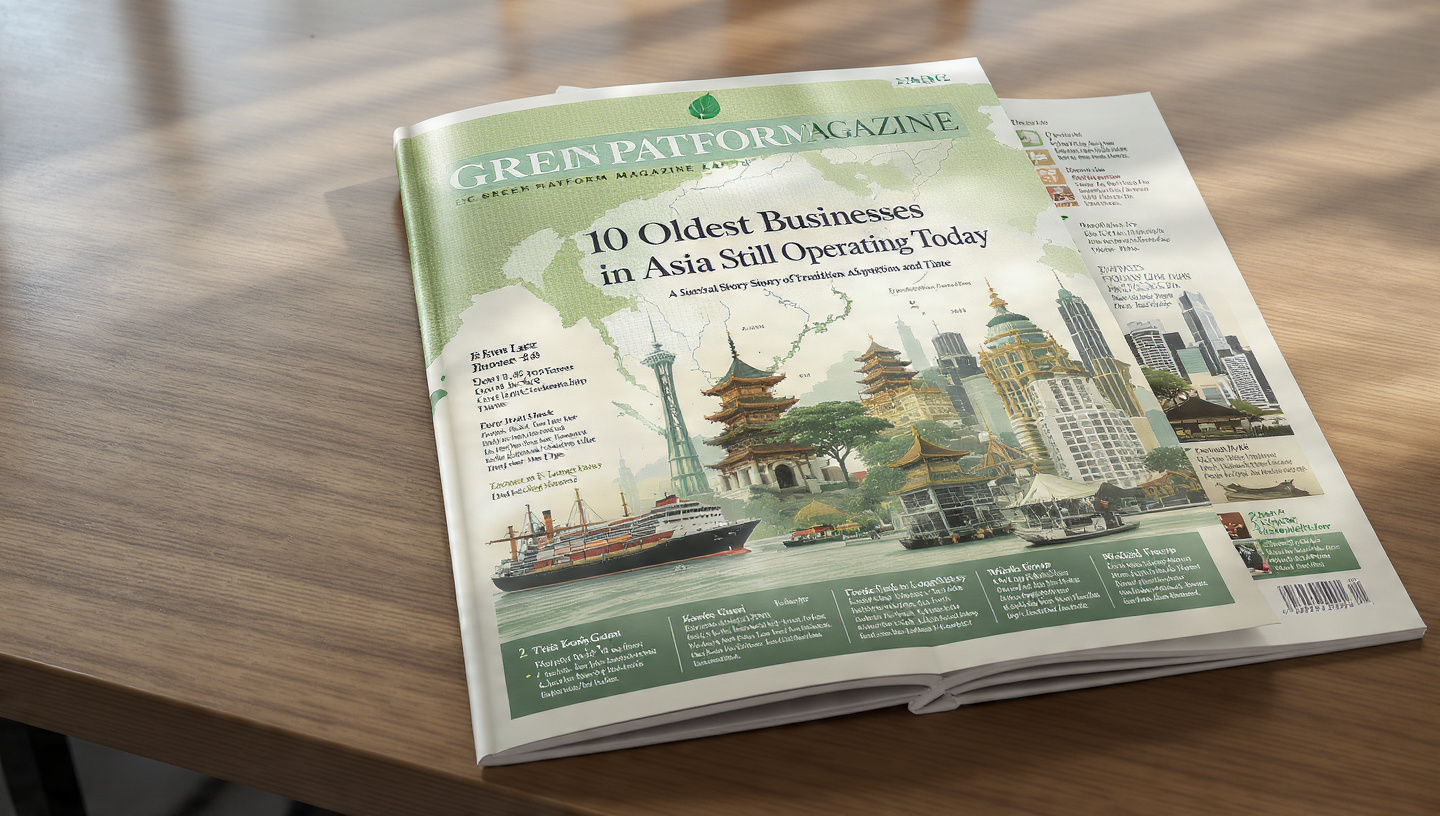
A survival story of tradition, adaptation, and time.
Before skyscrapers rose over Tokyo…
before global trade routes crossed oceans…
before electricity reshaped daily life…
Some Asian businesses were already alive.
They survived emperors and empires, earthquakes and wars, colonization and modernization. Like ancient species in the wild, they adapted to changing climates of culture and commerce.
This is the story of ten of Asia’s oldest businesses still operating today.
From Japan’s mountain hot springs to China’s imperial pharmacies and India’s shipyards, these enterprises began in worlds ruled by hand tools and candlelight.
Their environments changed. Their customers changed. Their technologies changed.
They endured.
🏗️ Kongō Gumi — Japan (founded 578)
Founded to build Buddhist temples, Kongō Gumi became the world’s oldest known construction company, preserving sacred wooden architecture for more than 1,400 years while adapting to modern corporate structures.
Survival strategy: generational craftsmanship and structural adaptation.
♨️ Nishiyama Onsen Keiunkan — Japan (founded 705)
Hidden deep in Japan’s mountains, this hot-spring inn has welcomed travelers for over thirteen centuries, quietly blending ancient hospitality with modern comfort.
Survival strategy: preserving tradition while upgrading experience.
🏨 Hōshi Ryokan — Japan (founded 718)
Run by the same family for dozens of generations, Hōshi Ryokan refined the art of service without chasing trends.
Survival strategy: consistency of cultural experience.
📜 Genda Shigyō — Japan (founded 771)
🌐 https://www.genda-shigyo.co.jp
Specializing in ceremonial paper goods for Shinto rituals and imperial traditions, Genda Shigyō occupies a quiet but essential niche.
Survival strategy: becoming indispensable to cultural rites.
🕯️ Tanaka-Iga Butsugu — Japan (founded 885)
For over a millennium, Tanaka-Iga Butsugu has crafted Buddhist altars and sacred objects, preserving spiritual artistry through wars and modernization.
Survival strategy: spiritual relevance and meticulous handcraft.
🏮 Koman — Japan (founded 707)
Known for traditional Japanese sweets refined across centuries, Koman continues to serve flavors tied deeply to memory and ceremony.
Survival strategy: emotional connection through taste.
🌿 Tong Ren Tang — China (founded 1669)
Once supplier to China’s imperial court, Tong Ren Tang evolved into a global traditional-medicine brand by blending ancient formulas with modern standards.
Survival strategy: scientific modernization of heritage.
🚢 Wadia Group — India (founded 1736)
Beginning with shipbuilding for colonial trade, the Wadia Group diversified into aviation, textiles, and food — spreading risk across industries.
Survival strategy: diversification.
🧪 Eu Yan Sang — Singapore (founded 1873)
From a humble herbal shop to a pan-Asian healthcare retailer, Eu Yan Sang scaled traditional medicine into a regulated modern ecosystem.
Survival strategy: turning heritage into retail networks.
🥃 Destileria Limtuaco — Philippines (founded 1852)
The Philippines’ oldest distillery continues producing spirits rooted in Spanish-era recipes while embracing modern manufacturing.
Survival strategy: blending colonial legacy with local identity.
🌅 Closing Reflection
In nature, survival belongs not to the strongest — but to the most adaptable.
Across Asia, these businesses endured because they respected tradition and embraced transformation. Some stayed small and sacred. Others scaled globally. All learned when to evolve.
Their story teaches a universal lesson:
Longevity is not about resisting time — it’s about moving with it.